Digital Libraries: How to Discover Books and Learn Online in 2026
Digital Libraries: How to Discover
Books and Learn Online in 2026
Meta Title: Digital Libraries in 2026: Discover Books Online | Noor Books Hub
Meta Description: Explore the benefits of digital libraries, discover online books,
improve your reading habits, and find useful learning resources with Noor Books
Hub.
Focus Keyword: Digital Library
Secondary Keywords: Online Books, Digital Reading, Online Library, Ebooks, Books for
Students, Educational Resources, Reading Online, Digital Learning
Suggested URL Slug: digital-libraries-online-reading-guide
Introduction
Reading is one of the most effective ways to gain knowledge, develop new
skills, and explore different perspectives. However, finding the right book is
not always easy. Traditional libraries provide valuable resources, but readers
today also want convenient ways to discover books and educational materials online.
Digital libraries are helping make reading and learning more accessible.
With an internet-connected device, readers can explore book collections,
research unfamiliar subjects, and discover resources that match their
interests.
Whether you are a student preparing for examinations, a professional
learning a new skill, or a book lover exploring different genres, digital
reading can become a valuable part of your daily routine.
In this guide, we explore the benefits of digital libraries, how to find
useful books online, and how to develop better reading habits with Noor Books
Hub.
What Is a Digital Library?
A digital library is an online collection of digital resources, such as
ebooks, research materials, historical documents, educational publications, and
other reading resources.
Unlike a traditional library, which primarily provides physical books, a
digital library can make electronic materials accessible through a website or
digital platform.
Depending on the service, readers may be able to search by book title,
author, subject, or category. Some platforms also provide online reading,
downloadable files, book descriptions, or recommendations.
The availability of these features varies between platforms, and access
may depend on copyright restrictions, licensing terms, and account
requirements.
7 Benefits of Using a Digital Library
1. Convenient Access to Reading
Resources
Digital libraries can help readers discover books without needing to
visit a physical location. Depending on the platform, resources may be
accessible from a computer, tablet, or smartphone.
This convenience is particularly useful for people who have limited time
or live far from a traditional library.
2. Explore Different Subjects
Online book collections can cover a wide range of subjects, including
literature, history, science, technology, education, personal development, and
language learning.
Exploring different categories allows readers to discover new interests
and expand their knowledge beyond their usual reading choices.
3. Support Students and Independent
Learners
Students often need supplementary resources to understand difficult
topics and prepare for examinations.
Digital reading materials can complement classroom teaching by providing
additional explanations, examples, and perspectives. Independent learners can
also use books to develop professional skills or study a new subject at their
own pace.
Readers should verify that educational resources are accurate, current,
and appropriate for their learning objectives.
4. Discover Authors and New Books
Finding an interesting book can sometimes be as challenging as reading
it. Searching by author, subject, or genre can help readers discover
publications they might not otherwise encounter.
Book descriptions and reviews, when available, can also help readers
decide whether a title matches their interests.
5. Build a Flexible Reading Routine
Digital books can make it easier to read during breaks, while travelling,
or whenever a suitable opportunity arises.
A simple routine, such as reading for fifteen minutes each day, can help
make learning more consistent.
The goal is not to finish as many books as possible. It is to understand
the material and apply useful ideas.
6. Support Research and Knowledge
Discovery
Researchers, writers, and professionals often need to explore several
sources before developing an informed understanding of a topic.
Digital collections can make it easier to locate relevant publications
and identify resources for further study.
Always check the author, publication date, publisher, and supporting
evidence when using books for academic or professional research.
7. Help Readers Explore Knowledge
Across Languages
Online collections may include books in different languages, allowing
readers to explore literature and ideas from different cultures.
Readers learning a new language can also use suitable books to expand
vocabulary and improve comprehension.
Check the language, edition, and translation details before choosing a
book for study.
How to Find the Right Book Online
Finding a useful book requires more than choosing the first result in a
search list. These steps can help you select suitable reading material.
Step 1: Define Your Goal
Decide what you want to learn. You might be looking for academic
knowledge, professional skills, historical information, personal development,
or entertainment.
Step 2: Search by Topic or Author
Use specific keywords rather than broad phrases. For example, searching
for beginner programming books may produce more relevant results than searching
for technology alone.
Step 3: Read the Book Description
Review the summary to understand the subject, intended audience, and main
themes.
Step 4: Check the Publication Details
For subjects that change quickly, such as technology, medicine, and law,
look for current and authoritative publications. For historical literature, an
older edition may still be valuable.
Step 5: Review Access Conditions
Check whether the book is available for online reading, download, purchase,
or library access. Follow the applicable copyright and licensing terms.
Step 6: Choose a Manageable Reading Plan
Select a realistic amount of reading for your schedule. Taking notes and
reviewing important ideas can improve comprehension.
Digital Libraries vs. Traditional
Libraries
Both digital and traditional libraries offer important benefits. The best
choice depends on the reader's needs.
|
Feature |
Digital Libraries |
Traditional Libraries |
|
Access |
Through supported
digital devices |
Usually through a
physical location |
|
Physical books |
Generally not the
main format |
Often a major part
of the collection |
|
Search |
May provide
electronic search tools |
May offer
catalogues and librarian assistance |
|
Reading experience |
Screen-based
reading |
Physical books and
printed materials |
|
Availability |
Depends on the
platform and access rights |
Depends on opening
hours and collection access |
|
Research support |
Varies by service |
May include direct
assistance from librarians |
Digital and traditional libraries can complement one another. Readers can
use online collections for convenience while continuing to benefit from
physical books, librarians, and local educational resources.
Tips for Becoming a Better Reader
Developing a consistent reading habit takes planning and patience. These
practical strategies can help.
Set a Daily Reading Goal
Start with ten or fifteen minutes each day. Increase your reading time
gradually as the habit becomes more comfortable.
Take Useful Notes
Write down important ideas, unfamiliar terms, and questions that arise
during reading. Brief notes can make it easier to review information later.
Choose Books That Match Your Level
If a subject is unfamiliar, begin with an introductory book before moving
to advanced material.
Avoid Unnecessary Distractions
Choose a quiet place, silence unnecessary notifications, and focus on one
reading task at a time.
Apply What You Learn
When possible, use the knowledge gained from a book in your studies,
work, writing, or everyday decisions.
Review Your Progress
At the end of each week, reflect on what you learned and identify
subjects you would like to explore next.
How Noor Books Hub Can Fit into Your
Reading Journey
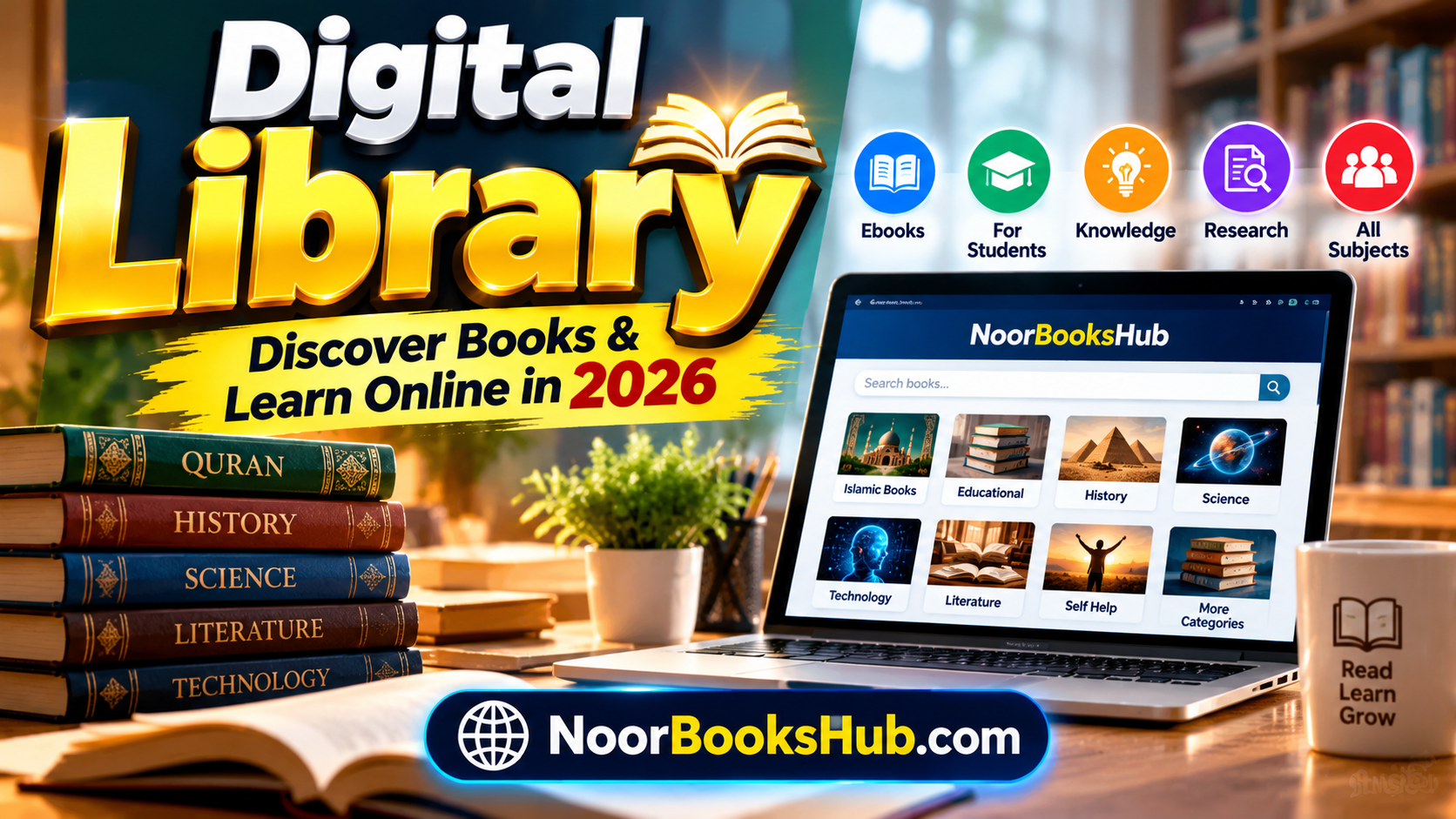
Noor Books Hub can serve as a starting point for readers interested in
exploring online books and discovering useful reading resources.
As you explore the website, look for available book categories, search
options, descriptions, and other features that help you identify relevant
material.
Choose books according to your interests and learning goals. Before
relying on a publication for academic research, confirm its authorship,
edition, credibility, and relevance.
Authors and publishers should also ensure that any books they make
available online are distributed with the necessary permissions.
The purpose of a useful reading platform is not simply to provide access
to more titles. It is to help readers discover appropriate resources and make
meaningful use of the knowledge they gain.
Visit Noor
Books Hub to explore the website and its available resources.
Frequently Asked Questions
What is a digital library?
A digital library is an online collection of electronic books and other
digital resources that readers can access according to the platform's terms.
Are digital libraries useful for
students?
Yes. They can help students discover supplementary reading materials,
explore unfamiliar subjects, and support independent learning. Students should
verify that their sources meet academic requirements.
Can I read books online without
downloading them?
Some digital libraries support online reading, while others provide
downloads or alternative access methods. Availability depends on the individual
platform and the rights associated with each publication.
How do I choose a reliable book for
research?
Check the author's qualifications, publisher, publication date,
references, and relevance to your topic. For important research, compare
information across multiple credible sources.
Are all ebooks free to download?
No. Some ebooks are available free of charge, while others require
purchase, a subscription, or permission from the copyright holder. Always
follow the stated access conditions.
How can I improve my reading habits?
Set a realistic daily goal, choose appropriate books, take notes,
minimize distractions, and review what you learn regularly.
Conclusion
Digital libraries provide convenient opportunities to discover books,
explore new subjects, and support lifelong learning. By choosing reliable
publications and developing a consistent reading routine, readers can turn
online resources into meaningful educational tools.
Whether your goal is academic success, professional development, personal
growth, or the simple pleasure of reading, selecting the right books is an
important first step.
Explore Noor Books Hub and continue your journey toward discovering
useful books, valuable ideas, and new opportunities to learn.
Featured Image Alt Text: Digital library with ebooks and online reading resources for students
and book lovers
Featured Image Title: Digital Libraries and Online Reading Guide 2026
Suggested Category: Digital Books and Reading
Suggested Tags: Digital Library, Online Books, Ebooks, Digital Reading, Online Learning,
Books for Students, Reading Tips, Educational Resources
Suggested Internal Links:
- Best Books for Students and
Lifelong Learners
- How to Develop a Daily Reading
Habit
- Benefits of Reading Books Every
Day
- How to Choose the Right Book for
Your Studies
- Digital Reading Tips for
Beginners
Publishing note: Add internal links only after the corresponding articles
exist. Confirm that all mentioned features are available on Noor Books Hub
before describing them as existing website services. Ensure that any
downloadable books are legally available for distribution.